A South Korean scientist and her six-year-old son struggle to survive an apocalyptic deluge in their apartment building, but the disaster hides far more than meets the eye. The Great Flood, the latest South Korean thriller from Netflix, has more twists than a bag of pretzels. Jaws will drop as a second-act reveal transforms what seemed like a straightforward plot into something entirely unexpected. This shift is clever at first, but the story soon becomes too convoluted, biting off more than it can chew in a bonkers climax. Some viewers will enjoy the wild turns, while others may mentally check out in abject confusion. Either way, The Great Flood keeps you guessing.
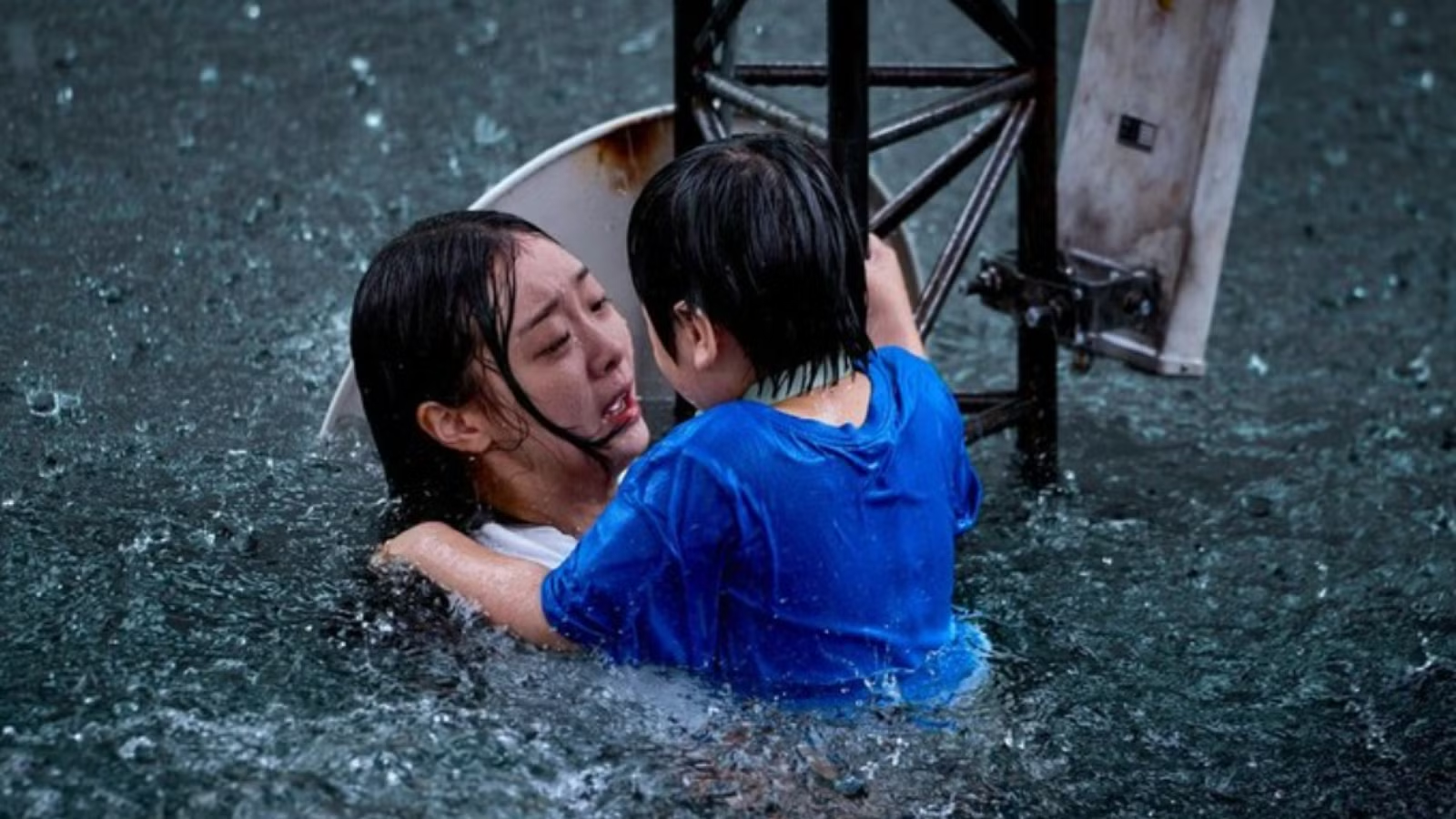
Rain can be heard in the background as Dr. Gu An-na (Kim Da-mi) wakes up in bed with her six-year-old son Ja-in (Kwon Eun-seong). He begs her to go swimming as a groggy An-na stumbles around the apartment kitchen to make breakfast before realizing that water is pooling on the living room floor. Anna rushes to the bathroom to check if the tub is overflowing and hears a thunderous rushing noise.
A confused An-na doesn’t understand, but follows Hee-jo’s instructions. She puts Ja-in on her back and enters a hallway filled with screaming people. Her neighbors are crowding the stairway – there are screams, cries, and prayers as An-na decides to try her luck on the outside staircase. She steps into the torrent to see people being swept away to their doom. How are they going to escape?

The Great Flood has you firmly in its clutches with a gripping start that uses solid visual effects to sell an immediate dilemma. An-na and Ja-in are in a life-or-death situation. She must act quickly to save their lives, but everyone else in her building has the same thought. Your nerves are on edge until An-na has a curious flashback: She faced a similar incident and barely survived, but suffered a tragic loss. What does that situation have to do with what’s happening now? Can it all be just bad luck? Or is there a deeper reason for An-na to have a front-row seat at the end of times?
Read Also: James Bond Films Head to Netflix in Major Licensing Deal With Amazon MGM Studios
The answer to An-na’s question is mind-blowing, to say the least. And that’s just the first volley in a series of whoppers that are dropped like plot grenades. Director/co-writer Kim Byung-woo (Take Point, Omniscient Reader: The Prophecy) isn’t making a standard catastrophe flick. He takes a deeper thematic dive into the emotional core of humanity to ask probing questions: What does it mean to truly value life? How far will a desperate mother go to save what is most precious? Kim has a bigger, more complex picture to explore, and he sure as heck doesn’t mind going fully abstract in the process. The problem is that the journey may be a cerebral bridge too far for the unwilling.
That said, let’s steer clear of spoiler territory and focus on what Kim does well. An-na, Ja-in, and Hee-jo have a primary objective of getting to the roof. That’s tough enough, with others also seeking higher ground as the water rises and tidal waves slam into the building. But imagine having to deal with a frightened and confused child who doesn’t follow orders. Ja-in runs, hides, and has to use the bathroom, among other issues that derail any chance of an easy getaway. As a child, he’s a constantly changing variable and his safety is of the utmost importance. The Great Flood is most effective and realistic whenever Ja-in is in danger.

Kim films the ascent to the roof with slick editing, great tracking shots, and VFX. There’s constant momentum as the cast continually moves onward and upward despite unrelenting floods. Kim ups the action ante with gunplay and bloody fight scenes as the plot thickens and the building setting becomes secondary as the film’s true intentions and scope are revealed. The CGI goes from particle flow dynamics like water to something completely different. The poster and trailer give away a massive hint, so be forewarned.
The Great Flood goes off the rails in a finale that draws heavily from two classic films (which will be obvious when the credits roll). The ending does make logical sense, but suffers from exposition overload. You can respect the mystery aspects, Kim’s creativity, and his obvious filmmaking acumen, but honestly be exhausted at The Great Flood’s finish line.
Source: movieweb